
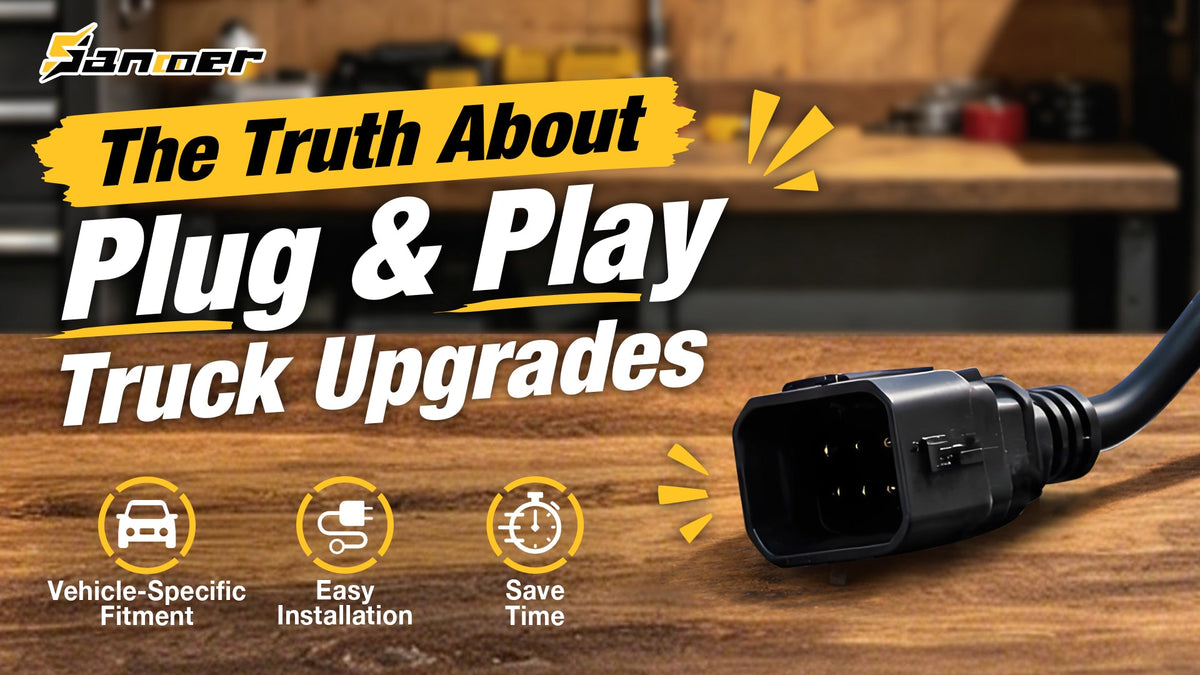
You found a set of aftermarket towing mirrors that matches your truck. The product listing says “Plug & Play,” the connector looks identical to the factory plug, and the installation seems straightforward.
Before assuming the mirrors are defective, there's one important thing to understand: a connector that fits your truck does not automatically mean every feature on the replacement mirror will work.
“Plug & Play” can describe how a product connects physically, but complete functionality may also depend on the vehicle's existing wiring, fuse protection, electronic modules, and factory configuration.
This is particularly important when upgrading pickup trucks such as the Chevrolet Silverado/GMC Sierra, Ford Super Duty, and RAM. Two trucks of the same model year can have different original mirror features and electrical configurations.
In this guide, we'll explain what “Plug & Play” really means, why some mirror functions may require extra steps, and how to troubleshoot the problem without making unnecessary modifications.
What Does “Plug & Play” Actually Mean?
In simple terms, Plug & Play means a product is designed to connect to an existing system with minimal installation work.
For automotive accessories, however, the term can mean different things depending on the product and manufacturer.
A replacement tow mirror might use the factory connector and support the functions already available on your truck. Another version may fit the same connector but include additional lights or features that require wiring or vehicle configuration changes.
It's helpful to distinguish three levels of compatibility.
Level 1: Physical compatibility
The replacement mirror fits the vehicle's mounting location, and its connector can be connected to the factory harness.
This is the first requirement, but it doesn't guarantee that every pin, circuit, or function matches.
Level 2: Electrical compatibility
The connector pins, wiring, voltage supply, grounds, and control signals match the requirements of the replacement mirror.
If an additional lighting function needs a signal that your truck doesn't provide at the mirror connector, a separate wiring solution may be necessary.
Level 3: Functional compatibility
The mirror's hardware, wiring, and vehicle electronics all support the intended features.
For example, the mirror glass adjusts correctly, the heating function works, and the turn signals illuminate under the proper conditions.
This is what most truck owners actually want when they purchase a plug-and-play upgrade: not just a mirror that physically fits, but one that works as expected.
The key takeaway: Physical fitment, electrical compatibility, and full functionality are related, but they are not the same thing.
OEM Connectors: A Matching Plug Doesn't Tell the Whole Story
The OEM connector is the factory-style electrical plug used by the original equipment manufacturer.
Using a matching OEM-style connector is beneficial because it can reduce installation complexity and help preserve the factory wiring. In a well-matched application, it may eliminate the need to cut wires or create custom connections.
However, the connector itself is only one part of the system.
Connector shape versus pinout
The connector housing determines how the plug physically connects. The pinout determines what each terminal actually does.
Not every connector contains all these circuits, and not every pin is necessarily populated.
Even when two connectors look similar, their terminal assignments or supported functions may differ.
What should you check?
Before installation, compare the original mirror's functions with those of the replacement mirror.
Check the exact vehicle year, trim, original mirror features, connector type, and replacement mirror version. If you are unsure about the pinout, use the correct vehicle-specific wiring diagram rather than relying on wire colors alone.
Never assume that a connector is fully compatible simply because it plugs in without resistance.
Programming and FORScan: When Does Software Enter the Picture?
Programming and configuration are often discussed alongside plug-and-play upgrades, but they are not the same as physically connecting the mirror.
Some vehicles support certain features through configurable module settings. When the necessary hardware and wiring are present, changing a supported setting may allow the vehicle to recognize or operate an added function.
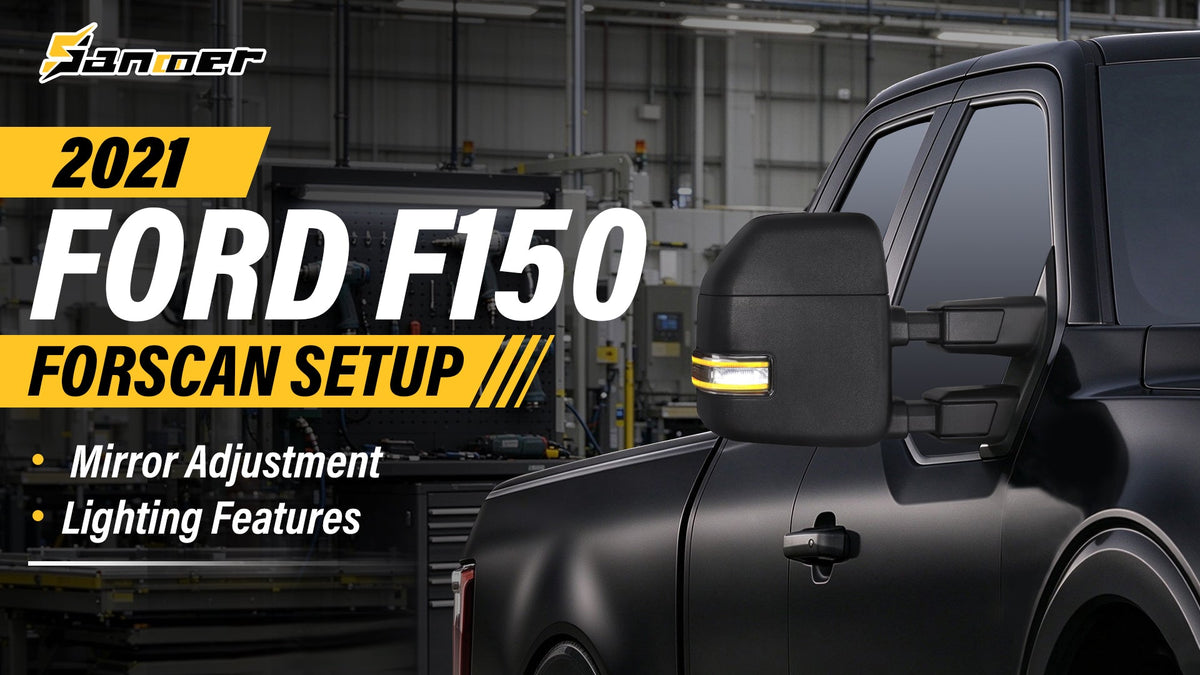
For supported Ford applications, owners and technicians may use FORScan to read diagnostic information and access certain module configuration options.
FORScan is a diagnostic and configuration tool, not a universal solution for every installation issue.
When might programming be needed?
Depending on the vehicle and feature, a configuration change may be worth investigating when:
· The replacement mirror contains the correct hardware.
· The necessary wiring and electrical connections have been verified.
· The relevant vehicle module supports the function.
· The feature remains unavailable because of the vehicle's existing configuration.
A configuration change should only be made when the applicable setting has been verified for the exact vehicle.
When won't programming solve the problem?
Programming alone will not fix:
· A loose or damaged connector
· Incorrect pin assignments
· A missing power or signal wire
· A faulty mirror motor or lighting component
· A missing hardware feature
· A circuit that lacks the required electrical supply
Before changing any module settings, save the original configuration and use reliable, vehicle-specific documentation.
For Ford owners, the official FORScan website is a starting point for software information and documentation. The appropriate procedure and available parameters depend on the truck's year, trim, module version, and original equipment.
A useful rule: Diagnose the physical and electrical installation before attempting software changes.
What Should “Plug & Play” Mean When You're Buying Tow Mirrors?
For truck owners, the most useful question isn't simply whether a product is advertised as plug-and-play.
It's what the term means for your particular vehicle.
A well-designed replacement mirror should have clear compatibility information and installation guidance. When additional wiring or configuration is required, that should be explained rather than left for the owner to discover after installation.
For manufacturers and sellers, transparency about compatibility is just as important as the product's appearance and feature list.
Conclusion: Plug & Play Should Be Simple—but Compatibility Still Matters
Upgrading your truck with aftermarket towing mirrors shouldn't require guesswork.
However, the phrase “Plug & Play” doesn't always mean that every feature will work immediately on every vehicle. The result depends on the connector and pinout, existing wiring, circuit protection, electronic modules, and the truck's original configuration.
If your new mirrors connect physically but some functions don't work, start with the basics: confirm compatibility, inspect the connectors, and verify the wiring. Check fuses when the circuit design calls for it, and investigate module configuration only after the physical installation has been verified.
The goal is not to make installation unnecessarily complicated. It's to understand what your truck already supports and what, if anything, is required to complete the upgrade.
Before choosing your next set of tow mirrors, verify the fitment and function requirements for your exact truck. A little preparation can save time, prevent unnecessary modifications, and help you get the full benefit of your new mirrors.
Looking for premium, precision-engineered towing mirrors for Chevy Silverado/GMC Sierra, Ford Super Duty, Dodge RAM, or Toyota Tundra? Check out Sanooer Autoparts full lineup of direct-fit towing mirrors and accessories in Sanooer Official Store today!
For other needs, feel free to check out Sanooer Youtube channel and social media platforms to explore more content that interests you!

Leave a comment
All comments are moderated before being published.
This site is protected by hCaptcha and the hCaptcha Privacy Policy and Terms of Service apply.